
Introduction: From the Basement to the Brain
Two decades ago, Global Capability Centers (GCCs) were transactional units, quietly managing payroll, procurement, and reporting — the unseen yet vital “basement” of global enterprises.
Today, the landscape is shifting. India, home to the world’s largest concentration of GCCs, stands at the forefront of this evolution. While GCCs are moving closer to the strategic core of organizations, they face challenges: talent risks, rising competition, and geopolitical complexity.
The promise of GCCs powering the enterprise of 2030 is clear, but it demands bold, deliberate transformation.
Strategy: From Support Cast to Strategic Co-Owners
India’s GCC ecosystem has expanded rapidly:
- 1,700+ GCCs by 2024, employing 1.9M professionals
- USD 50B revenue (projected to double by 2030)
- 44% co-own global product roadmaps
- 70% leverage AI/ML for analytics and optimization
This growing influence, however, is creating alignment and IP challenges with enterprise headquarters. As GCCs become “co-architects” of enterprise strategy, organizations must strengthen global governance models and integrate GCCs into decision-making processes.
GCC Setup in India: Beyond Cost Arbitrage
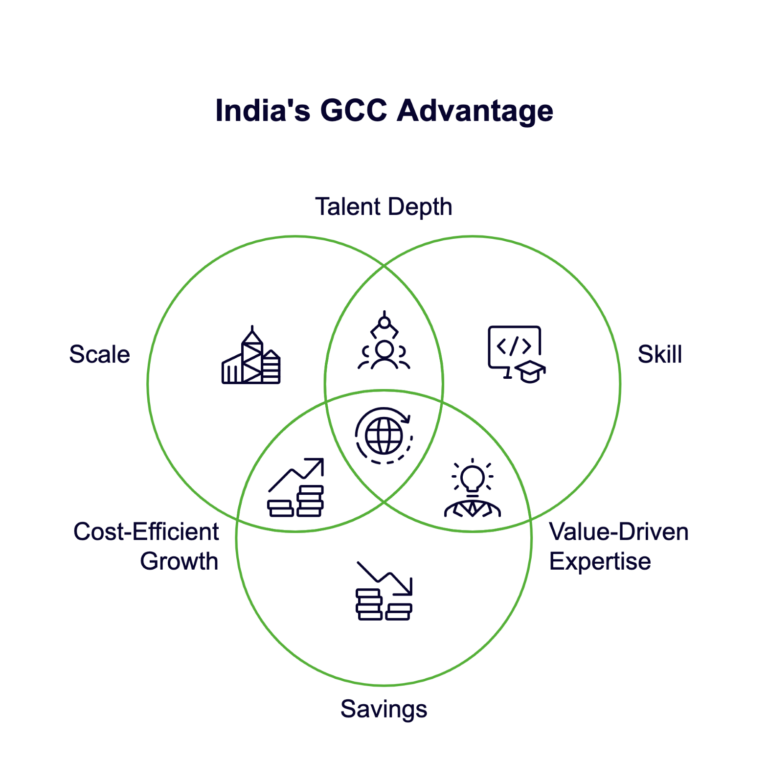
India’s appeal stems from a unique blend of scale, skill, and cost savings:
- 30–35% savings in talent and operations
- Supportive state-level GCC policies
- Tier-II city growth (Coimbatore, Indore, etc.)
Yet, risks loom:
- Over-concentration: Heavy reliance on India can increase exposure to local disruptions.
- Talent bottlenecks: While Tier-II cities are improving, digital skill readiness still lags.
The enterprise of 2030 will require diversification, balancing India’s strengths with hubs in Southeast Asia, Eastern Europe, and Latin America.
Features: GCCs as Innovation Drivers — or Are They?
Indian GCCs are undeniably stepping up:
- 185+ AI/ML Centers of Excellence
- Innovations like JPMorgan’s blockchain work and Walmart’s digital twin initiatives
Yet, many struggle to move from “delivery” to “disruption.” Cultural barriers, limited upstream influence, and fragmented decision-making often stifle their innovation potential.
TBEM and Governance: Necessary, But Not Sufficient
As GCCs take on enterprise-critical roles, excellence and accountability become non-negotiable. The Trust Business Excellence Model (TBEM) provides a framework emphasizing:
- Leadership and strategic alignment
- Customer focus and measurable outcomes
- Operational transparency and flexibility
However, TBEM alone may lack the agility required for digital innovation. Enterprises are increasingly combining TBEM with agile OKRs, continuous discovery, and lean experimentation to balance discipline with speed.
The GCC 2030 Model: Promise and Pitfalls
The next-generation GCCs are expected to:
- Operate real-time, AI-enabled command centers
- Embed sustainability (e.g., carbon-neutral campuses)
- Shift from project delivery to platform-building
But achieving this requires:
- New talent models: From cost arbitrage to value and innovation creation
- ESG & DEI integration: Few GCCs have fully embraced these metrics as core KPIs
Without deliberate action, “2030 GCCs” risk becoming aspirational slogans rather than a reality.
Challenges: The Roadblocks Ahead
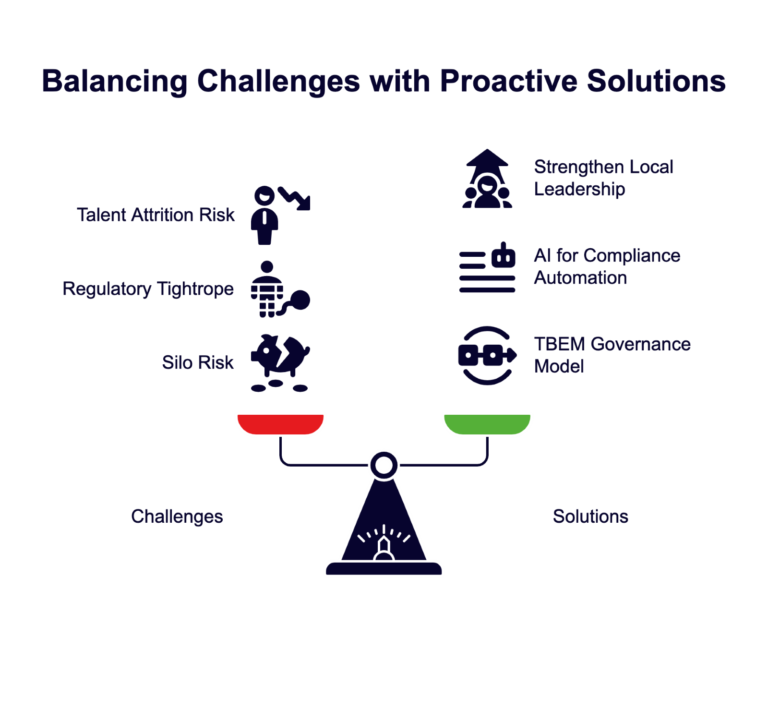
GCCs must tackle:
- Talent churn and rising pay inflation for AI/digital roles
- Regulatory hurdles like data sovereignty and IP compliance
- Strategic drift, with GCCs innovating in silos disconnected from headquarters
Solutions include:
- Building local leadership with global experience
- Leveraging AI for compliance automation
- Adopting hybrid governance models combining TBEM rigor with agile practices
GCCs — From Option to Imperative
GCCs have shifted from cost centers to strategic assets. Their future success will depend on balancing:
- Innovation with alignment
- Scale with resilience
- Cost with value creation
The question is no longer whether to build GCCs in India but how to build globally integrated, future-ready GCCs that can power the enterprise of 2030—sustainably, securely, and strategically.